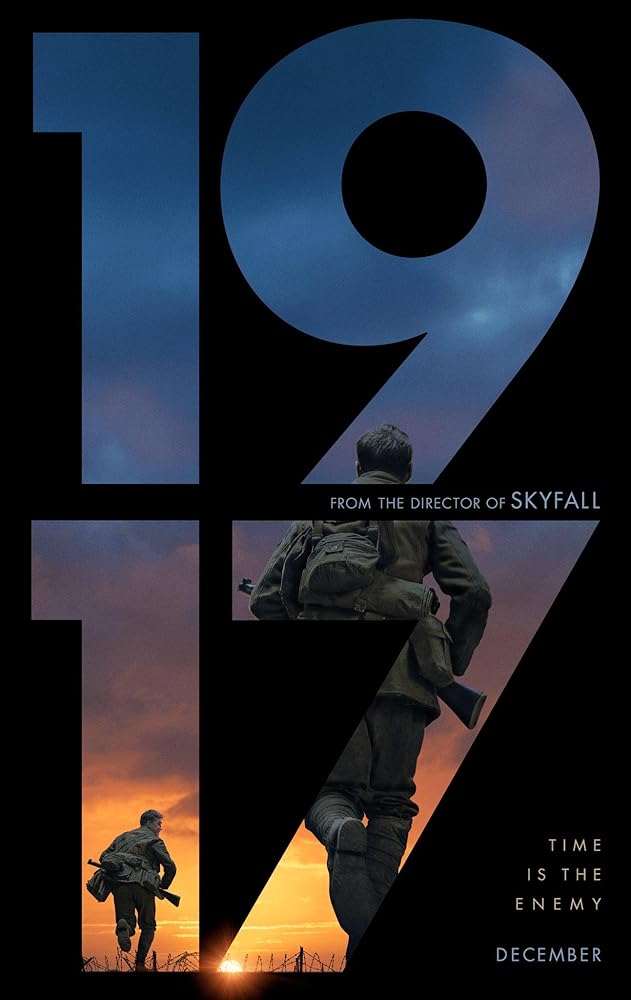
Director: Sam Mendes Writer: Sam Mendes, Krysty Wilson-Cairns
My problem with Sam Mendes has always been that I think he too often sacrifices story and content for style and form. He never passes up a chance to get that beautiful shot, even if he has to sacrifice the film to do it. He did it in the last two Bond films, and he does it here. Make no mistake, he does get beautiful shots, but we’re often so wowed by his technique that the story suffers. In 1917, he again attempts to wow us with his technical prowess, using a series of long takes, digitally woven together to appear as one long shot.
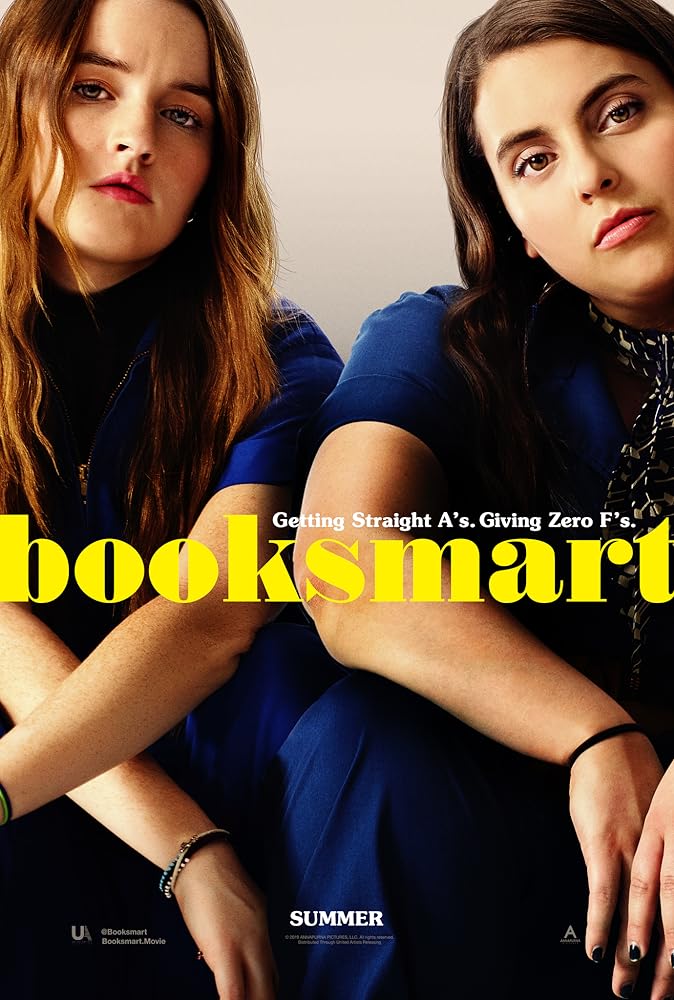
High school seniors Molly (Beanie Feldstein, just announced as a Golden Globe nominee) and Amy (“Last Man Standing”’s Kaitlyn Dever) have spent the last four years doing all the right things: working hard, studying hard, eschewing a social life. And their sacrifices have paid off. Molly is headed to Yale, and Amy to Columbia. On the last day of school, however, they find out that all the popular, partying kids they thought were headed towards a life of adequate mediocrity (is that redundant?) are actually headed for top 10 schools or great jobs. Even Molly’s rival—the class tramp (Molly Gordon, also great in Good Boys this year!)—will be attending Yale with her. “I’m incredible at hand jobs,” she says, “but I also got a 1560 on the SATs.” Molly begins to wonder if they’ve missed out on four years of fun and decides that there’s only one thing for the two to do—try to cram four years of partying into one night!
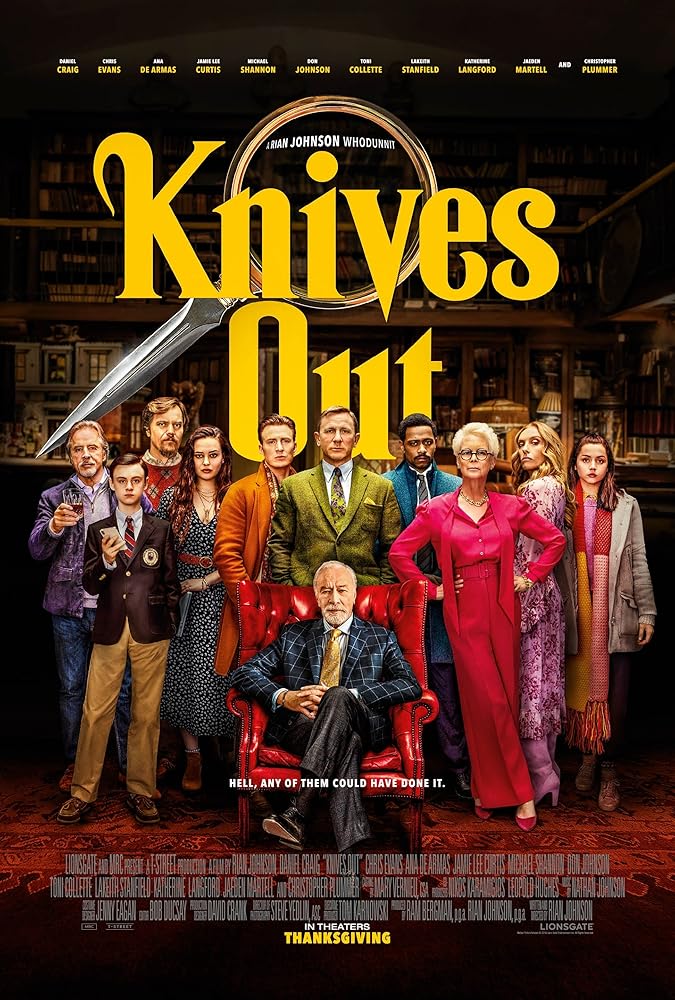
I love a good, old-fashioned cozy mystery. Knives Out isn’t a good one, however. It’s a great one. Writer/Director Rian Johnson channels his inner Agatha Christie to bring us the story of a dysfunctional family who discovers, the morning after the family patriarch’s birthday party, that said patriarch lies dead, his throat cut, in what appears to be a gruesome suicide. But this is no ordinary patriarch; this is Harlan Thrombey, multi-millionaire mystery writer, played by Christopher Plummer. And it soon becomes evident that it may not be a suicide, thanks to the presence of Consulting Detective Benoit Blanc (Daniel Craig, doing Sherlock Holmes, by way of Hercule Poiroit, by way of…well, someone with an outrageous southern accent).
I’m really working overtime on this one. It’s one of those films—which I personally love so much—that resists explanation, resists definition. But I’ll do my best because I really want you to see this one.
The film opens with a quote from Pauline Kael, written across the screen: “Actors and actresses are usually more beautiful than ordinary people. And why not?”
It’s clear quite early on that this film is satire, an examination of the expectations of beauty, the falseness of cinema, and the standards by which we treat those who don’t meet those expectations.
It’s another film-within-a-film (I just finished One Cut of the Dead), a film about a pretentious German (maybe) director shooting his first American film (Marked for Life) about a doctor who operates on the disfigured, trying to make them look “normal.” (Think Eyes Without a Face.) Herr Director (no, seriously…that’s what he’s called) has decided to cast actual disfigured people as extras in the film. The bus full of them arrives, introducing us to Rosenthal, a man with neurofibromatosis (Adam Pearson). He is paired up with Mabel Fairchild (the underrated Jess Wexler), an actress who plays Frieda, the doctor’s blind sister, in Marked for Life. Much like her character in the film, Mabel can’t make eye contact with Rosenthal. At least at first.
If you stop watching this sometime within the first half hour, you will likely curse me and never trust one of my reviews again. And I probably wouldn’t blame you. But if you stick with this film until the end, you might be pleasantly surprised.
One Cut of the Dead opens with a 37-minute long unbroken take depicting a Japanese film crew shooting a low-budget zombie film in an abandoned WWII facility. Little do they know that there are real zombies lurching about! The director, who is happy to now see real fear on the faces of his actors, orders the cameras to keep rolling, despite the impending demise of his cast and crew. As you watch, it’s clear that it doesn’t seem to be a very good movie. But surprise—it’s not supposed to!
The second film I watched today (after To All the Boys I’ve Loved Before) is another film about teens, but they couldn’t be more different. Share is darker, both in subject matter and in execution. In it, sixteen-year-old Mandy (outstanding newcomer Rhianne Barreto) comes to one night on her front lawn. She’s clearly been drinking, and taking stock of her body, she finds bruises and other signs that indicate that something physical must have happened to her earlier in the night. The trouble is, she doesn’t remember anything. The next evening, though, she gets bombarded by texts from classmates telling her how sorry they are and asking if she’s okay. She doesn’t know what they’re talking about until one of them sends a blurry video, taken by someone at the party she attended. In it, Mandy is unconscious and surrounded by several boys, one of whom has pulled down her pants, exposing her bare bottom. They’re laughing and making comments and then the video stops.
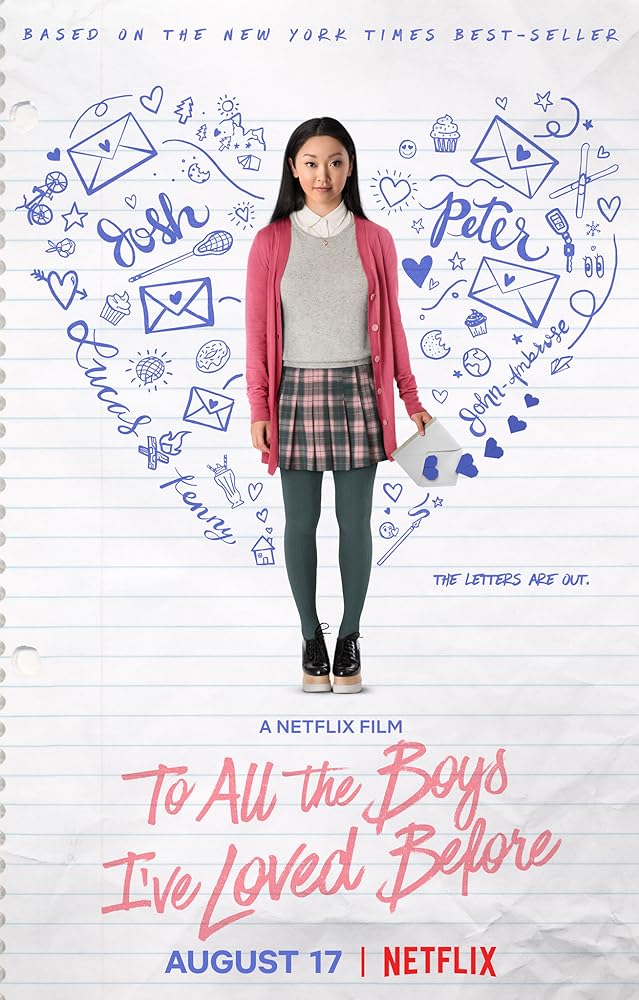
When working within a genre, the target for a film generally seems to be “the same…but different.” I always take that to mean that while a film may seem familiar and comfortable, there’s a newness to it that makes us feel as though we’re watching that particular kind of film for the first time. I think Susan Johnson’s film To All the Boys I’ve loved Before gets it just right. A Netflix original, there’s nothing here that breaks new ground. Change the clothing and slang and this could be an ‘80s John Hughes film. (Sixteen Candles is even referenced in the film.) Yet it’s a heartwarming film that succeeds in spite of its devotion to the genre, rather than because of it.
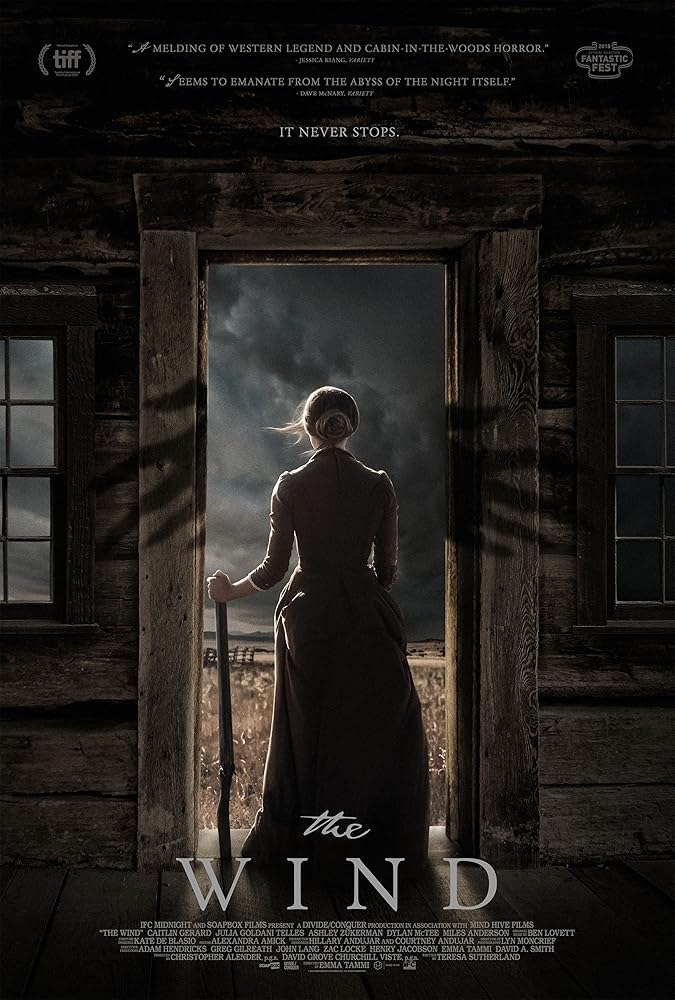
One key to creating a good horror film is isolation. Characters are almost always isolated physically (John Carpenter’s The Thing, Alien), culturally (Hostel), or both (An American Werewolf in London). Emma Tammi’s new film The Wind creates isolation through the setting of the Old West, where your nearest neighbors are often a mile or more away, and there are no cell phones with which to call 911. Reminiscent of recent slow-burn thriller/horror films, such as The Witch and Hereditary, this film, unlike this year’s Midsommar, immediately lets us know that something is off. The film opens with what appears to be a bloody childbirth, an event not unusual for a home birth in the Old West. But all is not what it seems…
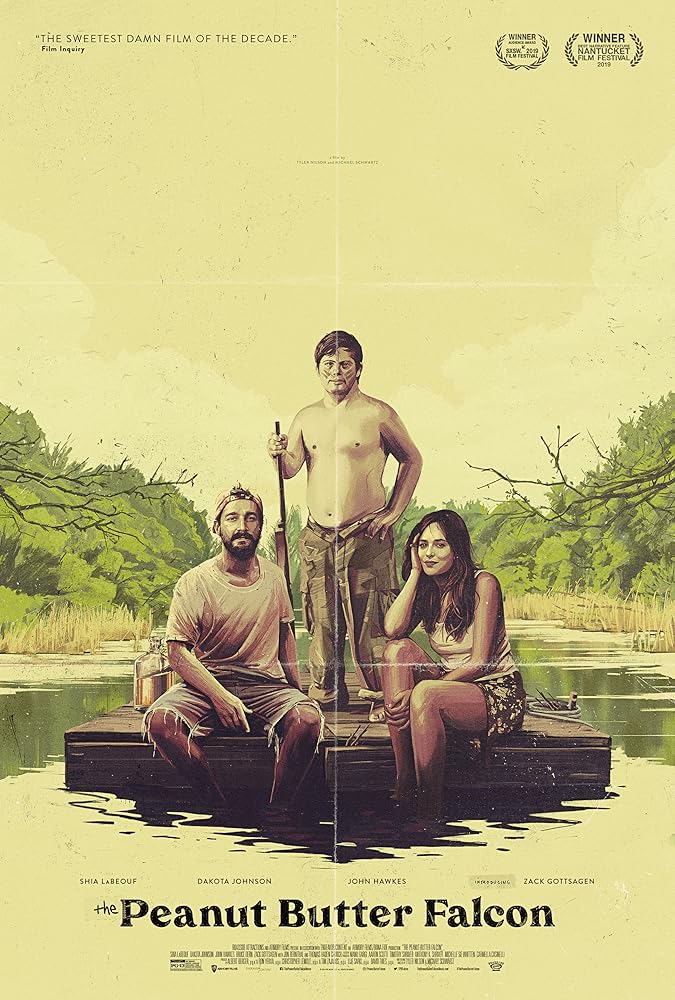
The Peanut Butter Falcon is a sweet buddy picture. Zak (Zak Gottsagen), a young man with Down Syndrome, escapes from the retirement home that has been his home for several years, in order to make his way to a wrestling training school and fulfill his dream of becoming a wrestler. He very quickly meets up with a rebellious-but-kind-hearted local on the run named Tyler (Shia LaBeouf). Together they embark on a Huck-Finn-style river trip. The duo becomes a trio when Zak’s health-care worker Elanor (Dakota Johnson, about as adorable as I’ve ever seen her) catches up with them, with instructions to return Zak to the home. Zak and Tyler have other plans, however.
Have you ever gone into a little dive of a restaurant and ended up having a killer meal? Watching Time Trap (2017) is a little like that. I’m so used to sitting down to a low-budget film and having it be so sub-par that I almost don’t know what to do when it’s not. To be fair, it’s not exactly “low” budget at $1 million, but they definitely got the most bang for the buck I’ve seen in a while. No cheesy effects or bad acting here. I put it on in the background while doing something else, but very quickly stopped that something else, because it was just that good.



 Who Cares What You Think?